In this article we hear from Dileep Prasad Harijan, a field researcher with our HERD International team in Nepal. Dileep describes the practical, intellectual and emotional experience of conducting face-to-face research, and the resilience and warmth of people living in communities on the frontline of the climate crisis.
What did I learn?
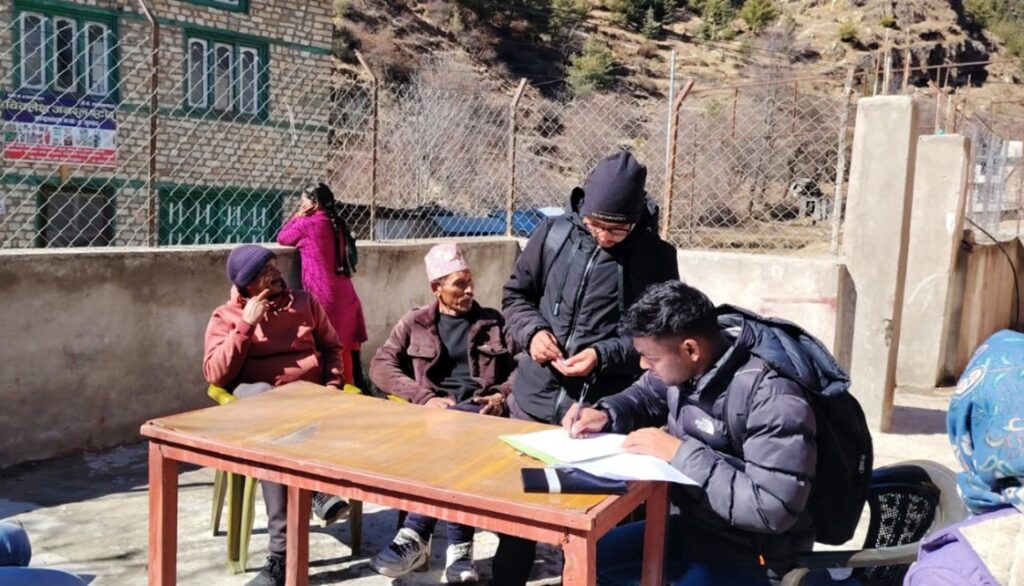
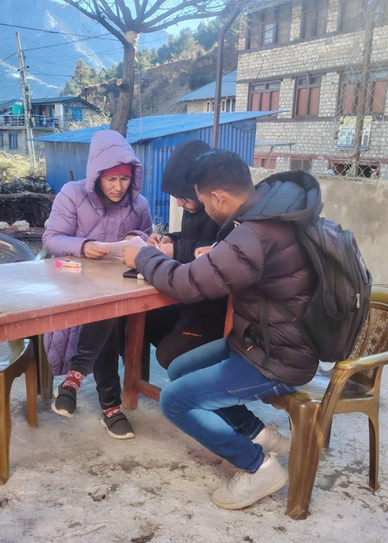
While conducting household surveys, climate change stopped being an abstract concept and became a visible reality. I observed changing agricultural patterns impacting farmers’ livelihoods, houses located in disaster-risk zones, and communities living with uncertainty.
Despite limited resources, community members warmly welcomed us. Their hospitality stood in contrast to their vulnerabilities. Interacting with residents taught me a powerful lesson: resilience is not only about infrastructure, it is about attitude. People with very little still expressed satisfaction with life. That perspective reshaped my understanding of wellbeing beyond material comfort.
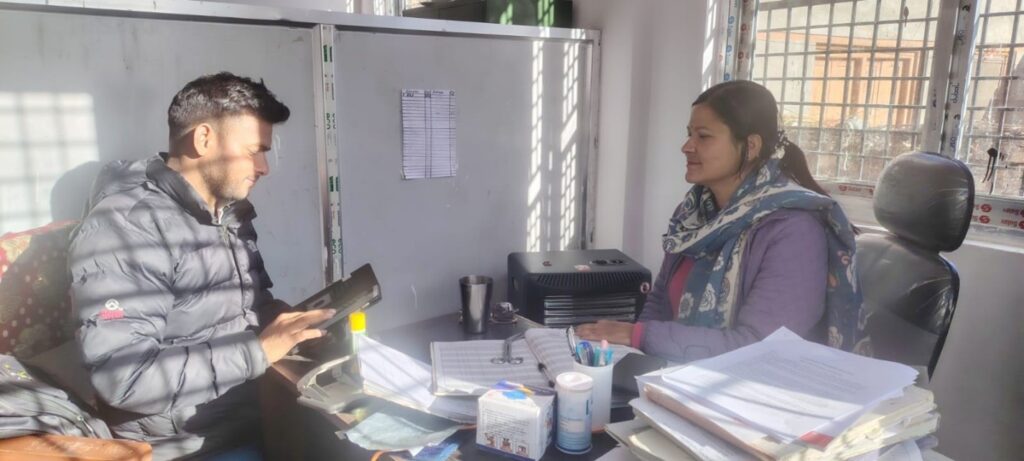
Health facilities revealed another dimension of climate resilience. Even with heavy patient flow, health workers gave time for interviews. I interacted with doctors, nurses, radiology staff, and administrative personnel. From them, I learned about facility preparedness challenges during extreme weather, resource limitations in remote settings, the importance of coordination and planning, and the commitment of health professionals despite constraints. Their readiness often depended on dedication and adaptability. When I expressed gratitude for their time, one of the health workers remarked, “Even with heavy patient flow, we make time to share our experiences, because research helps us improve.”
My takeaways
This exposure reminded me that climate change in remote regions is a lived, daily reality. Climate resilience is social as much as technical, and community awareness, however limited, exists even without formal education.
This journey also taught me that public health theory becomes most meaningful when applied to real community challenges. Understanding problems and challenges at the grassroots level helps enhance our learning and allows us to collaborate with local governments and communities.
Initially, I focused on the research opportunity in Jumla as a platform to build my professional skills in different aspects. However, beyond the expectations I carried beforehand, the experience turned out to be far more enriching than I had anticipated, offering lessons that went beyond anything I initially expected.